
By the Walking Paws Rehab team. Reviewed by Dr. Danyel Wynn, DVM, CCRT.
Dogs hide pain. It is built into them. By the time a limp is obvious, a problem has often been building for weeks, and by the time an owner says “he’s just slowing down,” there is usually something specific we can treat. Physical therapy for dogs is not only for recovery after surgery. Most of the patients at our Boulder and Denver clinics were never on an operating table. Here are the signs we wish more families recognized earlier.
1. Hesitating at stairs, the car, or the couch
A dog who used to bound into the back seat and now pauses, circles, or waits to be lifted is telling you that pushing off with the hind legs hurts. This is one of the earliest signs of hip or knee arthritis, a partial cruciate ligament tear, or back pain. It is easy to write off as age or caution. It is usually pain.
2. A limp that comes and goes
An intermittent limp, especially one that is worse after rest and improves with movement, is classic for arthritis and for soft-tissue injuries like iliopsoas strain or shoulder tendinopathy. Because it disappears, owners wait. Because they wait, the injury has time to become chronic. A limp that lasts more than a few days, or keeps returning, is worth an evaluation.
3. Sitting crooked or “puppy sitting”
Watch how your dog sits. A healthy adult dog sits square, with both hind legs tucked evenly. A dog who sits with one leg kicked out to the side, or who flops onto one hip, is avoiding bending a painful knee or hip. This is one of the most reliable early signs of a cruciate ligament problem, and it often shows up before any limping does.
4. Muscle loss in the hind end
Run your hands down both thighs. If one is noticeably thinner than the other, your dog has been shifting weight off that leg for a while. Muscle wastes quickly when a limb is under-used, and it is the clearest physical evidence that a problem is not new. Symmetric muscle loss across both hind legs, with a heavier front end, points toward chronic hip or back pain or a neurologic condition like degenerative myelopathy.
5. Scuffing the nails or knuckling
Listen on hard floors. Toenails that drag or click unevenly, or paws that occasionally land knuckled under, mean the nerves are not delivering the message to the feet properly. This is a neurologic sign, not an orthopedic one, and it deserves prompt attention. Conditions like intervertebral disc disease and lumbosacral disease respond far better when rehab starts early.
6. Slowing down on walks, or stopping altogether
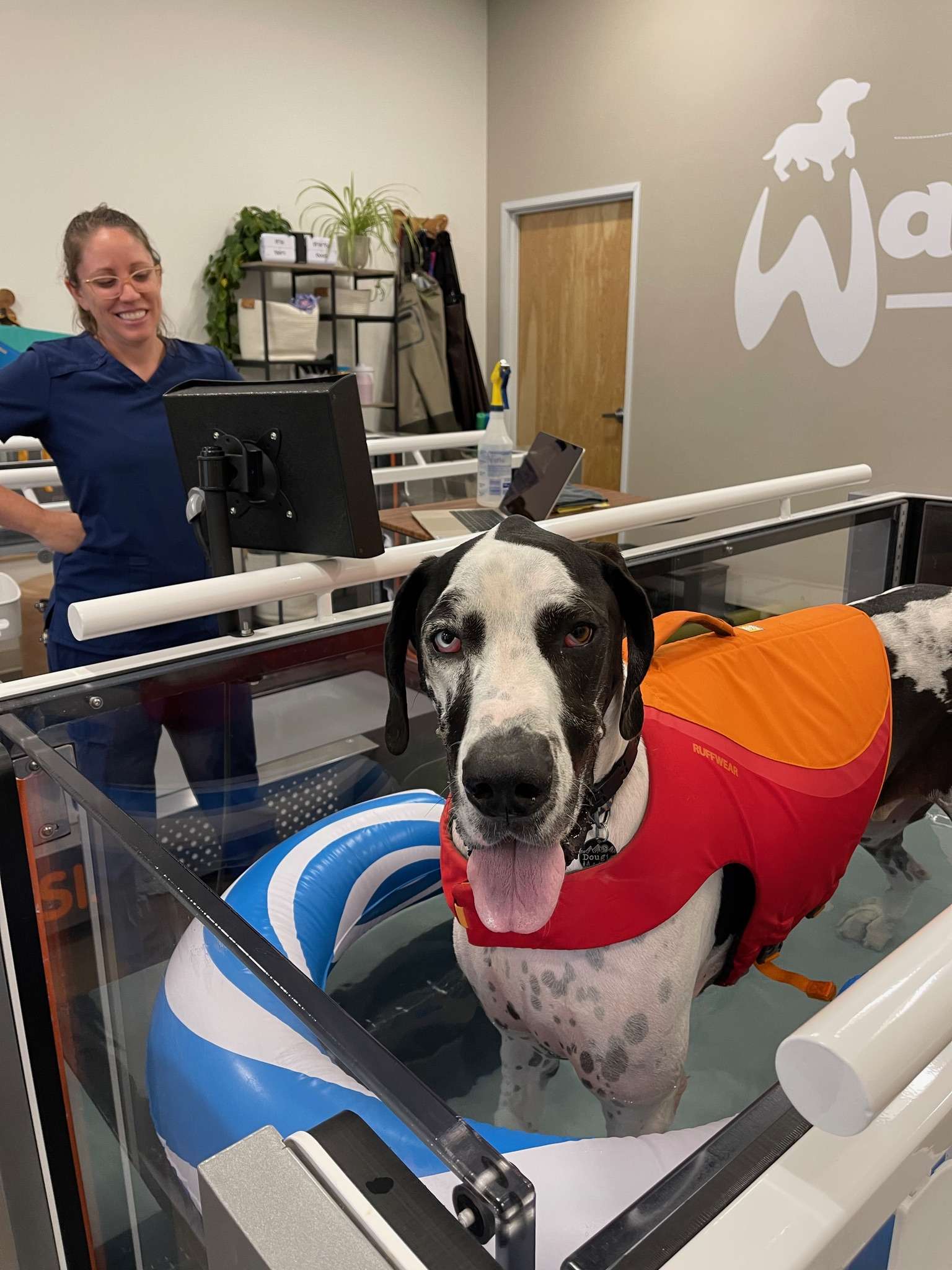
A dog who used to pull toward the trailhead and now lags behind, sits down mid-walk, or wants to turn for home is not being stubborn. Endurance drops when movement hurts. Owners of senior dogs often accept this as inevitable. It frequently is not; many of our older patients regain a real walk once pain is managed and strength is rebuilt with the underwater treadmill and a home program.
7. Personality changes
Irritability when touched, snapping at other dogs, hiding, restlessness at night, panting when it is not hot, or a dog who no longer greets you at the door. Chronic pain changes behavior before it changes gait. If your dog’s temperament has shifted and your veterinarian has ruled out illness, pain is the next thing to look for.
What happens at a rehab evaluation
Our first appointment is a full physical and functional exam: we watch your dog walk, trot, sit, and stand; measure joint range of motion and muscle mass; and feel for pain and tightness through the whole body, not just the leg you are worried about. Where a diagnosis is unclear we have musculoskeletal ultrasound and X-ray on site. You leave with a plan, a home exercise program, and a clear sense of what is going on. Read more about what to expect at a first visit.
You do not need a referral from your veterinarian to book, though we will ask for records. Schedule a consultation at our Boulder or Denver clinic, or call or text (720) 639-3924. If you are not sure whether what you are seeing is worth a visit, send us a video; a telehealth consultation is a good place to start.